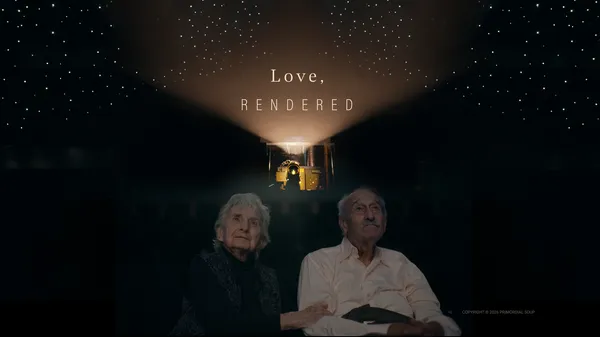
A Google DeepMind, Liz Garbus és Darren Aronofsky közreműködésével bemutatta a Love, Rendered című rövid dokumentumfilmet. Az alkotás egy több mint 70 éve házas, kognitív hanyatlással küzdő házaspár legelső találkozását rekonstruálja, amelyről soha nem készült fényképes vagy videós felvétel. Az AI-modellek segítségével a pár jelenlegi mozdulatait és gesztusait vetítették rá a régi fotók alapján újraalkotott, fiatalkori énjükre.
A technikai csapat a Primordial Soup kreatív műhellyel együttműködve, az érintettek aktív közreműködésével finomította a vizuális részleteket. A technológia egyszerűsített változata a mindennapokban is használható, a felhasználók ugyanis a Gemini alkalmazással már saját családi fotóikat is restaurálhatják. Ehhez mindössze fel kell tölteni egy régi képet, és megkérni az AI-t a színezésre, valamint a minőség javítására a pózok és az arckifejezések megőrzése mellett.
Az eredeti szöveg (Google AI)
Discover how filmmakers and Google DeepMind used AI to recreate a couple's unrecorded past in the short film "Love, Rendered."
Your browser does not support the audio element.
The documentary "Love, Rendered" uses artificial intelligence to help a couple with memory loss recreate a cherished, unrecorded moment from their past. By combining image restoration with performance capture, the team mapped the couple's current mannerisms onto their younger selves to build an authentic visual memory. You can try this technology yourself by asking the Gemini app to restore and colorize your own family photographs.
A new documentary called "Love, Rendered" uses AI to help an elderly couple recreate a precious memory that was never caught on camera. Engineers used old photos and the couple's current mannerisms to animate their younger selves with incredible detail. This project shows how technology can act like a digital paintbrush to help people hold onto fading memories. You can even try restoring your own family photos using the Gemini app.
“Love, Rendered,” a new documentary short, explores memory loss and the power of storytelling — and it showcases how technology can help rekindle memories that have begun to fade. The film follows Burt and Ethelle Shatz, a couple married for over 70 years, as they navigate Burt’s cognitive decline. Among his fading memories is one of their most precious: the day they met at a student co-op in Cleveland. Because it wasn’t photographed or filmed, the day existed only in their minds.
When I stepped in as the film’s technical lead, I knew the project would be as emotionally demanding as it was technically complex. Memory loss is personal to me. My grandfather suffered a stroke and memory loss before he passed. The last time I visited him, I was in my thirties. He was convinced I was still in college and was so happy I was graduating. That bittersweet memory never left me.
The experience made me want to see if this technology could help me connect more deeply with my family through the same medium. When this project began, I asked my father for old family photos. I tested our image restoration on photographs from when my parents met and used our video models to animate them. Watching my parents move as twenty-somethings really drove home how these tools could help keep what matters most from slipping away.
“Love, Rendered” was directed by Academy Award–nominated filmmaker Liz Garbus, who produced it alongside Dan Cogan and Darren Aronofsky. It was created in collaboration between Google DeepMind and Primordial Soup, Aronofsky’s creative venture.
Liz and Darren both came to the film curious about the resilience of memory. While directing the documentary “Coma,” Liz saw fMRI scans light up when patients in minimally conscious states heard familiar voices or were shown images of loved ones. Years later, Darren encountered footage of a former ballerina with Alzheimer’s who, upon hearing “Swan Lake,” instinctively danced the choreography from her wheelchair.
These touchstones led the creative team to reminiscence therapy, the clinical practice of using sensory cues like songs, family stories, and old photographs to stimulate memories, spark conversations, and rekindle emotional connections. But what happens when a memory isn’t attached to such cues?
To recreate Burt and Ethelle's unrecorded past, the filmmakers partnered with my team. Sitting alongside us, Ethelle became an active co-creator, correcting the curve of a staircase or the shape of a shoe heel.
We worked alongside the team at Primordial Soup, leveraging emerging AI models as an art medium and toolkit, guiding the technology with human direction every step of the way.
Bridging the gaps between the missing details required a two-part technical approach designed to preserve emotional truth.
Combining these two mediums allowed us to intertwine Burt and Ethelle’s past and their present. In doing so, we generated a “memory” that they told u